
2025 Nobel Prize in Physics Awarded to American Scientists
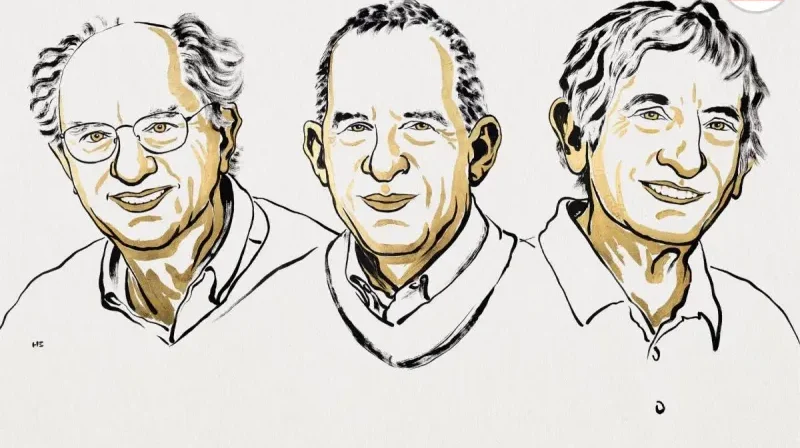
2025 Nobel Prize in Physics goes to three scientists for discovery of macroscopic quantum mechanical tunnelling The 2025 Nobel Prize in Physics — awarded to John Clarke, Michel Devoret and John Martinis — recognises experiments that demonstrated how quantum tunnelling can be observed on a macroscopic scale, involving many particles.
The Nobel Prize in Physics is being awarded to John Clarke, Michel H. Devoret and John M. Martinis “for the discovery of macroscopic quantum mechanical tunnelling and energy quantisation in an electric circuit,” the Royal Swedish Academy of Sciences announced in Stockholm on Tuesday (October 7, 2025). 2025 Nobel Prize in Physics Awarded to American Scientists.
Chair of the Nobel Committee for Physics:
“It is wonderful to be able to celebrate the way that century-old quantum mechanics continually offers new surprises. It is also enormously useful, as quantum mechanics is the foundation of all digital technology,” said Olle Eriksson, Chair of the Nobel Committee for Physics.
The transistors in computer microchips are one example of the established quantum technology that surrounds us. This year’s Nobel Prize in Physics has provided opportunities for developing the next generation of quantum technology, including quantum cryptography, quantum computers, and quantum sensors, the Nobel Prize committee said in a media release. 2025 Nobel Prize in Physics Awarded to American Scientists.
The Nobel Prize in Physics is being awarded to John Clarke, Michel H. Devoret and John M. Martinis “for the discovery of macroscopic quantum mechanical tunnelling and energy quantisation in an electric circuit,” the Royal Swedish Academy of Sciences announced in Stockholm on Tuesday (October 7, 2025).2025 Nobel Prize in Physics Awarded to American Scientists.
Chair of the Nobel Committee for Physics Olle Eriksson said,
“It is wonderful to be able to celebrate the way that century-old quantum mechanics continually offers new surprises. It is also enormously useful, as quantum mechanics is the foundation of all digital technology,” said Olle Eriksson, Chair of the Nobel Committee for Physics. 2025 Nobel Prize in Physics Awarded to American Scientists.
The transistors in computer microchips are one example of the established quantum technology that surrounds us. This year’s Nobel Prize in Physics has provided opportunities for developing the next generation of quantum technology, including quantum cryptography, quantum computers, and quantum sensors, the Nobel Prize committee said in a media release.
John J. Hopfield and Geoffrey Hinton were jointly awarded the Physics Nobel last year “for foundational discoveries and inventions that enable machine learning with artificial neural networks.” Nobel Prize announcements kicked off on Monday (October 7, 2025) with the Prize for Physiology or Medicine. Three scientists — Mary E. Brunkow, Fred Ramsdell, and Shimon Sakaguchi — shared the Medicine Nobel for identifying the immune system’s security guards, regulatory T cells.
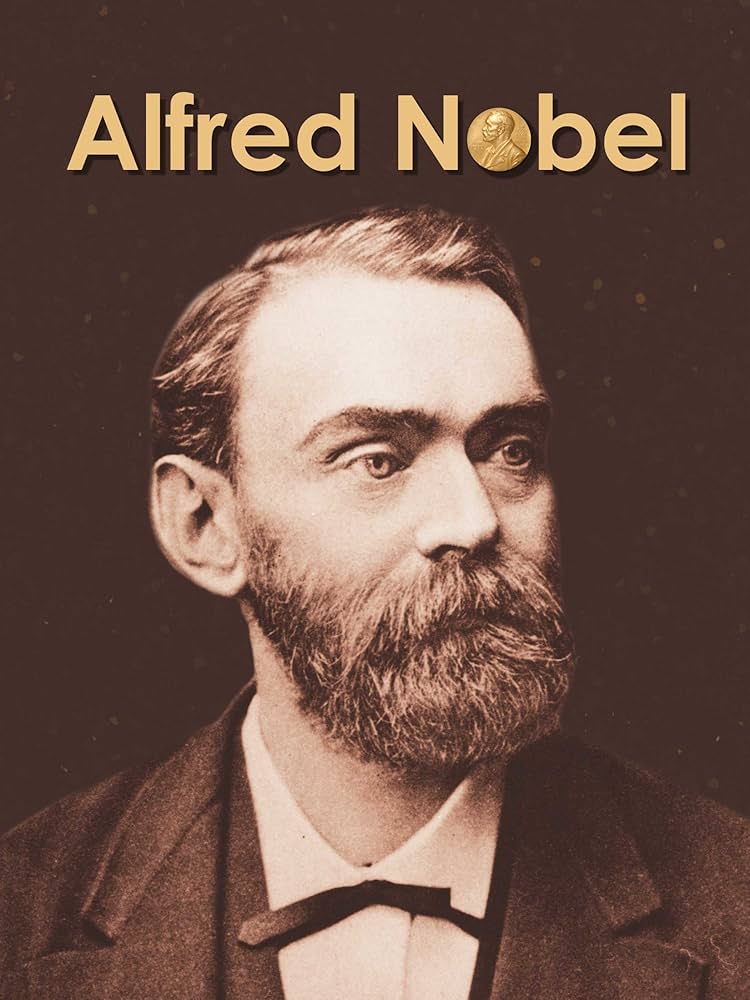
The winners for Chemistry will be announced on Wednesday (October 8), while the winners of the Literature, Peace and Economic Sciences Prize will be declared on October 9, October 10, and October 13 respectively. The prizes carry a cash award of 11 million Swedish kronor (approximately ₹1.03 crore) and will be awarded on December 10. The Nobel Prize was created by Swedish inventor Alfred Nobel, who in his will dictated that his estate should be used to fund “prizes to those who, during the preceding year, have conferred the greatest benefit to humankind”. 2025 Nobel Prize in Physics Awarded to American Scientists.
The Nobel Prize is one of the world’s most prestigious honours, awarded every year to individuals or organisations who have made exceptional contributions to humanity. Named after Alfred Nobel— the Swedish inventor, entrepreneur, and philanthropist— the prize reflects his wish that his fortune be used to recognize those who bring “the greatest benefit to humankind.” Since its inception, the Nobel Prize has become a global symbol of excellence, innovation, and impact.
Each year, laureates are chosen across five key fields: Physics, Chemistry, Physiology or Medicine, Literature, and Peace— celebrating achievements that shape our world for the better. The Nobel Prize winners are announced in October each year. The winner announcements for 2025 began on October 6 and they will go on till October 13. The Nobel Prize 2025 in Physics winner was announced today.
Nobel Prize 2025 in Physics winner announced
2025 Nobel Prize in Physics Awarded to American Scientists. ‘The Swedish Academy of Sciences has decided to award the Nobel Prize in Physics 2025 to John Clarke, Michel H. Devoret, and John M. Martinis “for the discovery of macroscopic quantum mechanical tunnelling and energy quantisation in an electric circuit,” reads a statement on their official website. ‘The Swedish Academy of Sciences has decided to award the Nobel Prize in Physics 2025 to John Clarke, Michel H. Devoret, and John M. Martinis “for the discovery of macroscopic quantum mechanical tunnelling and energy quantisation in an electric circuit,” reads a statement on their official website. 2025 Nobel Prize in Physics Awarded to American Scientists.
A significant piece of good news has arrived from Stockholm, the capital of Sweden. The Royal Swedish Academy of Sciences has announced the names of the winners of the 2025 Physics Nobel Prize. The prize money is 10.3 crore rupees. In an announcement made at 3:15 PM, three prominent American scientists, John Clarke, Michael Devoret, and John Martinis, received this honour.
2025 Nobel Prize in Physics Awarded to American Scientists. Their discovery has elevated the laws of quantum mechanics to new heights, proving to be a milestone in the world of science. These scientists demonstrated quantum mechanical tunneling and energy levels through a small experiment in an electrical circuit. This circuit was so small that it could easily be held in the hand.
Typically, quantum rules apply to very small particles like electrons, which are so minuscule that they are invisible to ordinary instruments. However, their discovery proved these rules for the first time on a large, i.e., macroscopic scale. This achievement could bring about a revolution in the field of quantum technology. 2025 Nobel Prize in Physics Awarded to American Scientists.
Changes in Daily Routines
2025 Nobel Prize in Physics Awarded to American Scientists. The impact of this discovery will be seen in areas such as quantum cryptography, quantum computers, and quantum sensors. Imagine computers that are millions of times faster than today’s machines, or cryptography that makes hacking impossible.
The work of these scientists will provide a strong foundation for future technologies, bringing about changes in daily life. The Academy stated that this award recognises their contribution to understanding quantum effects.
Subrahmanyan Chandrasekhar Received the Award in 1983
2025 Nobel Prize in Physics Awarded to American Scientists.2025 Nobel Prize in Physics Awarded to American Scientists. It is noteworthy that the tradition of the Nobel Prize has been ongoing since 1901. So far, the award has been given 118 times in physics, involving 227 scientists. The youngest winner was 25-year-old Lawrence Bragg, while the oldest was 96-year-old Arthur Ashkin.
2025 Nobel Prize in Physics Awarded to American Scientists.This category has been a source of pride for India. Sir C.V. Raman was honoured in 1930 for the Raman Effect, a discovery that explained the behaviour of light. Today, it is used in lasers and medical equipment. Furthermore, in 1983, Subrahmanyan Chandrasekhar was awarded the prize for his discovery concerning the life and death of stars. He explained that large stars can transform into black holes.
The Prize Ceremony Will Be Held in Stockholm on December 10,2025
This year, Nobel Week is taking place from October 6 to 13. In the Medicine category, Katalin Karikó and Drew Weissman were awarded for their research on messenger RNA (mRNA) technology, which enabled the development of effective COVID-19 vaccines.
The winners will receive 11 million Swedish Krona (approximately 10.3 crore rupees), a gold medal, and a certificate. If the prize is shared among multiple people, the amount is divided. The ceremony will be held in Stockholm on December 10,2025 where prizes are awarded in memory of Alfred Nobel.
Permalink: https://newsrj21.com/2025-nobel-prize-in-physics-awarded-to-three-american-scientists/