
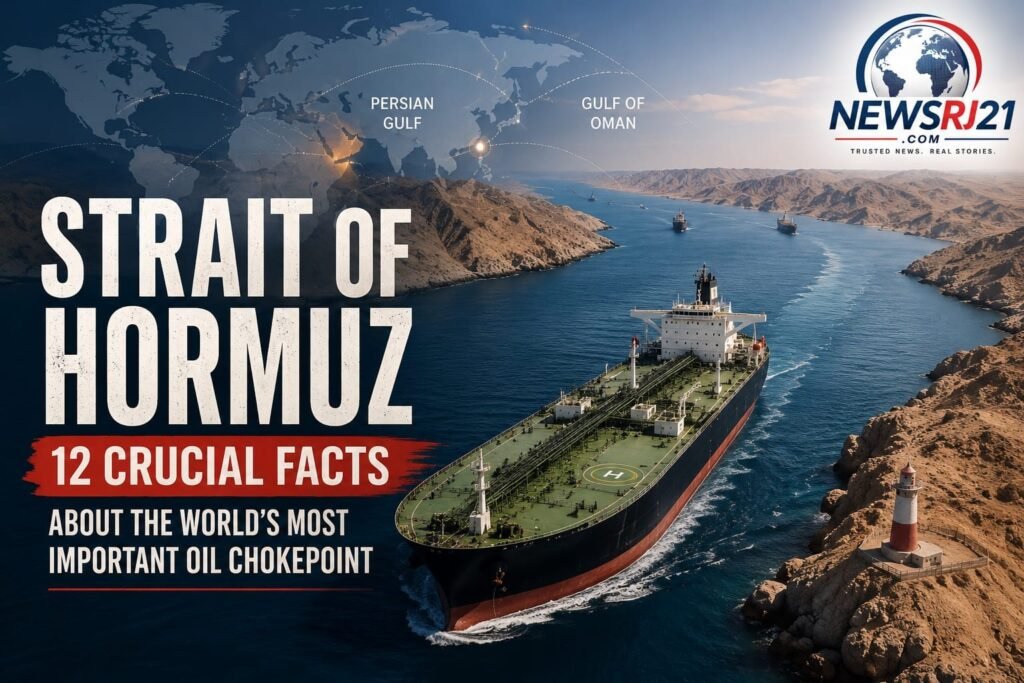
The Strait of Hormuz is one of the world’s most strategically important waterways, serving as the primary gateway for a significant share of global oil and liquefied natural gas (LNG) shipments. Located between the Persian Gulf and the Gulf of Oman, this narrow maritime passage plays a vital role in international trade, energy security, and global economic stability. Whenever tensions rise in the Middle East, the Strait of Hormuz quickly becomes the center of global attention due to its potential impact on oil prices, shipping routes, and financial markets.
In this article, you’ll discover 12 crucial facts about the Strait of Hormuz, including its location, strategic importance, historical significance, and why it remains one of the most closely watched waterways in the world.
What Is the Strait of Hormuz?
The Strait of Hormuz is a narrow natural waterway that connects the Persian Gulf to the Gulf of Oman and the Arabian Sea. It serves as the only sea passage for most oil-exporting countries in the Gulf, making it one of the busiest and most strategically important shipping routes in the world.
Despite being only a few dozen kilometers wide at its narrowest point, the strait handles a significant share of the world’s crude oil and liquefied natural gas (LNG) exports every day. Because of this, any disruption in the Strait of Hormuz can have immediate consequences for global energy markets, international trade, and fuel prices.
The strait has become a focal point of global geopolitics, with countries such as Iran, the United States, and Gulf nations closely monitoring security and maritime activities in the region. Its strategic location makes it one of the most important maritime chokepoints in the world.
Where Is the Strait of Hormuz Located?
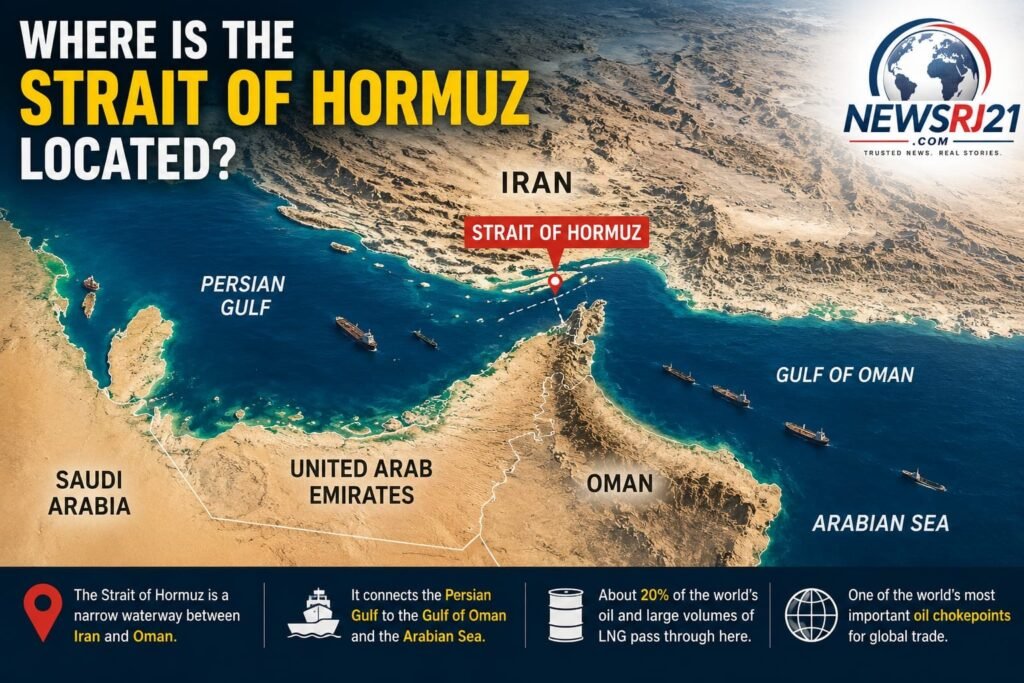
The Strait of Hormuz is located in the Middle East, connecting the Persian Gulf to the Gulf of Oman, which opens into the Arabian Sea and the Indian Ocean. This strategic waterway lies between Iran to the north and Oman and the United Arab Emirates (UAE) to the south.
At its narrowest point, the strait is about 33 kilometers (21 miles) wide. However, the designated shipping lanes used by large oil tankers are much narrower, making safe navigation essential for international maritime traffic.
The Strait of Hormuz serves as the main export route for oil and natural gas produced by major Gulf countries, including Saudi Arabia, Iraq, Kuwait, Qatar, Bahrain, and the UAE. Because there are limited alternative sea routes for these energy exports, the strait remains one of the world’s most strategically important maritime passages.
Its unique geographic position makes the Strait of Hormuz a critical link between the energy-rich Gulf region and global markets across Asia, Europe, and North America.
Why Is the Strait of Hormuz So Important?
The Strait of Hormuz is considered one of the most important waterways in the world because it serves as a vital gateway for global energy supplies. Every day, millions of barrels of crude oil and large volumes of liquefied natural gas (LNG) pass through this narrow passage, connecting major oil-producing nations in the Persian Gulf with customers around the world.
Its importance extends far beyond the Middle East. Countries across Asia, Europe, and North America rely on energy shipments that travel through the Strait of Hormuz. Even a temporary disruption can increase transportation costs, affect supply chains, and push global oil prices higher, influencing fuel prices and inflation worldwide.
The strait also holds immense geopolitical significance. It has long been at the center of regional tensions involving Iran, the United States, and Gulf nations. As a result, international naval forces regularly patrol the area to help protect commercial shipping and maintain freedom of navigation.
Because of its unique location and its role in global trade, the Strait of Hormuz is widely recognized as the world’s most strategic maritime chokepoint, making its security a matter of international concern.
Which Countries Border the Strait of Hormuz?
The Strait of Hormuz is bordered by Iran to the north and Oman and the United Arab Emirates (UAE) to the south. Although the strait is relatively narrow, it lies at the heart of one of the world’s most strategically important regions, making it a focal point for international trade and security.
Iran controls the northern coastline of the strait, while Oman governs the Musandam Peninsula on the southern side. The UAE also has a coastline near the southern entrance, contributing to the region’s maritime significance. Because the shipping lanes pass close to these countries, cooperation and stability are essential for ensuring the uninterrupted movement of commercial vessels.
Several Gulf nations—including Saudi Arabia, Iraq, Kuwait, Qatar, and Bahrain—do not directly border the Strait of Hormuz, but they depend heavily on it to export crude oil, refined petroleum products, and liquefied natural gas (LNG). As a result, any disruption in the strait can affect not only neighboring countries but also energy-importing nations across Asia, Europe, and other parts of the world.
The strategic location of these bordering nations has made the Strait of Hormuz a key area for international diplomacy, naval operations, and regional security. Military forces from multiple countries regularly operate in or near the waterway to safeguard commercial shipping and maintain freedom of navigation.
How Much of the World’s Oil Passes Through the Strait of Hormuz?
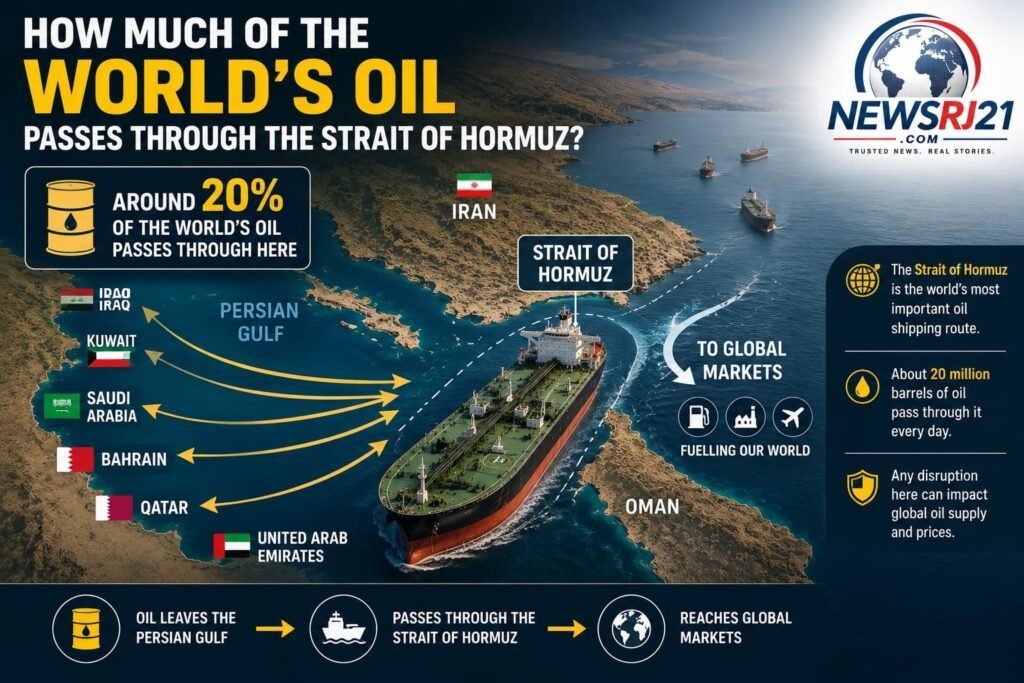
The Strait of Hormuz is one of the busiest energy corridors on the planet. On an average day, around one-fifth of the world’s oil consumption passes through this narrow waterway, making it the single most important transit route for global crude oil exports.
Millions of barrels of crude oil and petroleum products are transported through the strait every day from major Gulf producers, including *Saudi Arabia, Iraq, Kuwait, the United Arab Emirates, Qatar, and Iran. In addition to oil, the route is also critical for the export of *liquefied natural gas (LNG), particularly from Qatar, one of the world’s leading LNG exporters.
The majority of these energy shipments are destined for rapidly growing markets in *Asia, including *China, India, Japan, and South Korea. European countries also rely on supplies transported through the Strait of Hormuz, making the waterway essential to global energy security.
Because such a large share of the world’s energy passes through a relatively narrow channel, even a temporary disruption can have far-reaching consequences. Shipping delays, military tensions, or security incidents in the region can reduce supply, increase transportation costs, and trigger sharp increases in global oil prices. This is why governments, energy companies, and financial markets closely monitor developments in the Strait of Hormuz.
Why Is the Strait of Hormuz Called the World’s Most Strategic Chokepoint?
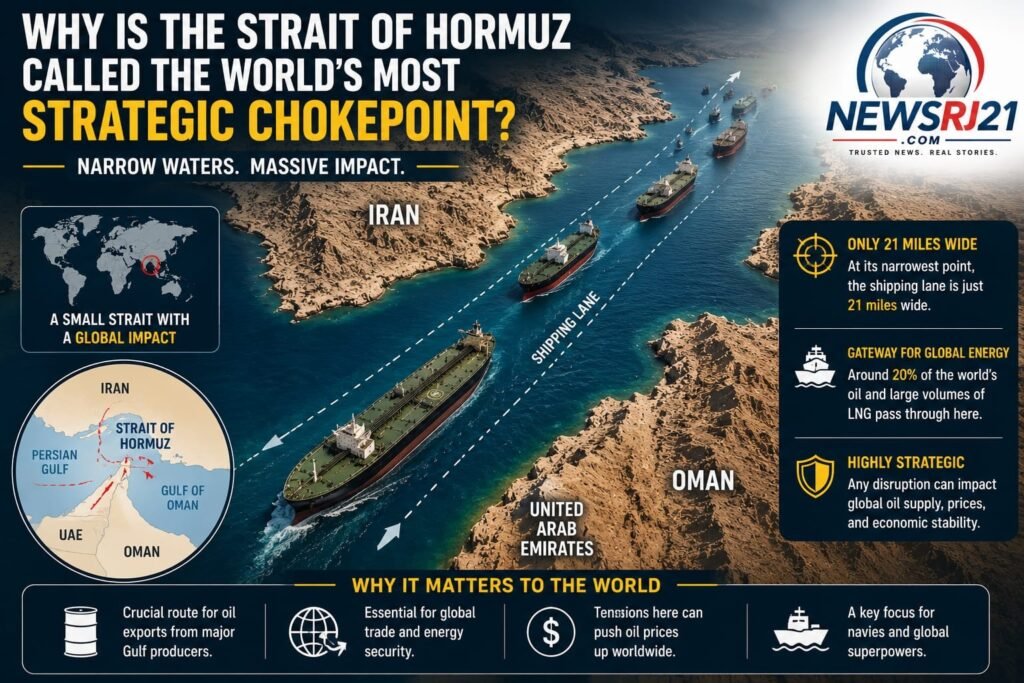
The Strait of Hormuz is often described as the world’s most strategic maritime chokepoint because it combines two critical factors: an exceptionally narrow shipping passage and an enormous volume of global energy trade. A maritime chokepoint is a narrow waterway through which a large amount of international shipping must pass, and few places fit that definition better than the Strait of Hormuz.
Although the strait is only about 33 kilometers (21 miles) wide at its narrowest point, the designated shipping lanes for incoming and outgoing vessels are much narrower. This limited space increases the risk of congestion and makes commercial shipping more vulnerable to accidents, military conflicts, or security threats.
Unlike many other trade routes, there are only a few practical alternatives for exporting oil from the Persian Gulf. While some Gulf countries have built pipelines that bypass the strait, these routes cannot handle the full volume of energy exports. As a result, the Strait of Hormuz remains the primary gateway for global oil and LNG shipments.
Its strategic importance extends beyond energy trade. The waterway is also a focal point for international security, with naval forces from several countries conducting patrols to protect merchant vessels and ensure freedom of navigation. Any disruption in this narrow passage can quickly affect fuel prices, financial markets, shipping costs, and global supply chains.
For these reasons, the Strait of Hormuz is widely regarded as the most strategically important maritime chokepoint in the world, playing a vital role in both international commerce and geopolitical stability.
Why Does Iran Frequently Threaten to Close the Strait of Hormuz?
Iran has repeatedly threatened to close the Strait of Hormuz during periods of heightened regional tensions, particularly when facing economic sanctions, military pressure, or conflicts involving the United States and its allies. These warnings are generally viewed as a strategic and political tool rather than an immediate indication that the waterway will actually be blocked.
For Iran, the Strait of Hormuz represents significant geopolitical leverage because so much of the world’s oil and natural gas trade depends on this route. By raising the possibility of disrupting maritime traffic, Iran can draw international attention, influence diplomatic negotiations, and signal its ability to respond to external pressure.
However, closing the Strait of Hormuz would also carry serious consequences for Iran itself. The country exports a portion of its own oil through the same waterway, meaning any prolonged closure could damage its economy alongside those of neighboring Gulf states. In addition, such an action would likely trigger a strong international response, as many countries depend on the strait for their energy supplies.
Over the years, tensions in the region have led to incidents involving commercial vessels, naval patrols, and military exercises. Although these events have occasionally disrupted shipping, the Strait of Hormuz has remained open to international navigation. Global powers continue to monitor the region closely because any major escalation could have significant economic and geopolitical consequences far beyond the Middle East.
How Would Closing the Strait of Hormuz Affect the Global Economy?
A prolonged closure of the Strait of Hormuz would have significant consequences for the global economy. Since a substantial share of the world’s crude oil and liquefied natural gas (LNG) exports passes through this narrow waterway, any disruption could immediately affect energy supplies, international trade, and financial markets.
The most immediate impact would likely be a sharp increase in global oil prices. If oil tankers are unable to transit the strait, supply could tighten rapidly while demand remains unchanged. Higher crude oil prices would increase the cost of gasoline, diesel, aviation fuel, and other petroleum products, placing additional financial pressure on households and businesses worldwide.
The effects would extend beyond the energy sector. Rising fuel costs would increase transportation and manufacturing expenses, leading to higher prices for food, consumer goods, and industrial products. This could contribute to inflation, slow economic growth, and create uncertainty in global financial markets.
Countries that rely heavily on imported energy—particularly in Asia and parts of Europe—would face the greatest challenges. Governments might be forced to release strategic petroleum reserves, seek alternative suppliers, or introduce emergency measures to stabilize domestic markets.
Although some Gulf countries have developed pipelines that bypass the Strait of Hormuz, these routes cannot fully replace the enormous volume of oil and gas normally transported through the waterway. For this reason, economists and energy analysts consider the uninterrupted operation of the Strait of Hormuz essential for maintaining stability in the global economy.
What Role Do the United States and Other Navies Play in the Strait?
The United States and several allied nations maintain a regular naval presence in and around the Strait of Hormuz to help ensure the safe passage of commercial ships and protect one of the world’s most important maritime trade routes. Because millions of barrels of oil and large volumes of liquefied natural gas (LNG) pass through the strait every day, maritime security is considered a priority for the international community.
The U.S. Navy, along with naval forces from countries such as the United Kingdom, France, and other international partners, conducts patrols, surveillance missions, and joint military exercises in the region. These operations are designed to deter piracy, respond to security threats, and maintain freedom of navigation for commercial vessels.
At times of increased regional tensions, additional warships and aircraft may be deployed to monitor developments and reassure international shipping companies. Naval escorts have also been used in certain situations to protect merchant vessels traveling through high-risk areas.
The presence of multiple international navies helps reduce the risk of disruptions to global trade and provides a rapid response capability in the event of emergencies or security incidents. While diplomatic efforts remain the preferred solution to regional disputes, maritime security operations continue to play a crucial role in keeping the Strait of Hormuz open and ensuring the uninterrupted flow of global energy supplies.
Can Oil Be Exported Without the Strait of Hormuz?
Although the Strait of Hormuz is the primary route for oil exports from the Persian Gulf, some countries have developed alternative pipelines and export terminals to reduce their dependence on this strategic waterway. However, these alternatives have limited capacity and cannot fully replace the enormous volume of oil and natural gas that normally passes through the strait.
For example, Saudi Arabia operates the East-West Pipeline, which transports crude oil from the country’s eastern oil fields to ports on the Red Sea. Similarly, the United Arab Emirates (UAE) has built a pipeline connecting its inland oil fields to the Port of Fujairah on the Gulf of Oman, allowing some exports to bypass the Strait of Hormuz.
Despite these alternative routes, a large share of Gulf energy exports still relies on the strait. Many countries, including Iraq, Kuwait, Qatar, Bahrain, and Iran, have limited or no practical alternatives for exporting most of their oil and liquefied natural gas (LNG). As a result, the Strait of Hormuz remains indispensable to global energy trade.
Experts generally agree that while pipelines can reduce the impact of temporary disruptions, they cannot completely offset a prolonged closure of the Strait of Hormuz. This is why the waterway continues to hold unmatched strategic importance for the global energy market and the international economy.
What Are the Biggest Security Risks in the Strait of Hormuz?
The Strait of Hormuz faces a variety of security challenges that have the potential to disrupt one of the world’s busiest maritime trade routes. Because of its strategic location and economic importance, the waterway is closely monitored by governments, naval forces, and international shipping companies.
One of the primary risks is geopolitical tension between regional and global powers. Diplomatic disputes, military confrontations, or sanctions can increase uncertainty and raise concerns about the safety of commercial shipping. Even when no direct conflict occurs, heightened tensions may lead to higher insurance costs and shipping delays.
Another challenge involves maritime security incidents, such as the seizure or inspection of commercial vessels, attacks on oil tankers, or the use of naval drones and surveillance systems. These incidents can temporarily disrupt shipping schedules and increase volatility in global energy markets.
The narrow shipping lanes also create navigational risks. Thousands of large tankers and cargo ships transit the Strait of Hormuz each year, leaving little room for error. Mechanical failures, collisions, or environmental conditions could affect the smooth flow of maritime traffic.
In addition, cybersecurity threats targeting shipping companies, port infrastructure, and navigation systems have emerged as a growing concern. As global shipping becomes increasingly dependent on digital technologies, protecting critical maritime infrastructure has become an important part of regional security.
Despite these risks, international cooperation, continuous naval patrols, and diplomatic engagement have helped keep the Strait of Hormuz open to commercial navigation for decades. Maintaining stability in this vital waterway remains essential for global trade and energy security.
What Does the Future Hold for the Strait of Hormuz?
The Strait of Hormuz is expected to remain one of the world’s most strategically important waterways for the foreseeable future. Despite ongoing efforts to develop alternative pipelines, renewable energy sources, and new trade routes, the global economy continues to depend heavily on the uninterrupted flow of oil and liquefied natural gas (LNG) through this narrow passage.
In the coming years, Gulf countries are likely to invest further in energy infrastructure that reduces reliance on the strait. However, these projects will complement rather than replace the waterway, as existing pipeline networks cannot handle the full volume of regional energy exports.
Technological advancements are also expected to play a greater role in improving maritime safety. Artificial intelligence, satellite monitoring, advanced navigation systems, and real-time vessel tracking may help reduce accidents and strengthen security across one of the busiest shipping corridors in the world.
At the same time, the future of the Strait of Hormuz will largely depend on regional diplomacy and international cooperation. Peaceful relations between Gulf nations, Iran, and major global powers will be essential for ensuring uninterrupted maritime trade and protecting global energy supplies.
Although the world is gradually transitioning toward cleaner energy sources, oil and natural gas will continue to play a significant role in the global economy for many years. As a result, the Strait of Hormuz is likely to remain a critical link in international trade, making its security and stability a priority for governments, businesses, and consumers around the world.
Frequently Asked Questions (FAQs)
1. What is the Strait of Hormuz?
The Strait of Hormuz is a narrow waterway located between Iran and *Oman, connecting the *Persian Gulf to the Gulf of Oman and the Arabian Sea. It is one of the world’s most important maritime trade routes for oil and natural gas exports.
2. Why is the Strait of Hormuz important?
The strait is crucial because around one-fifth of the world’s oil consumption passes through it. Any disruption can affect global energy supplies, increase oil prices, and impact international trade.
3. Which countries use the Strait of Hormuz?
Major Gulf energy exporters—including Saudi Arabia, Iraq, Kuwait, Qatar, Bahrain, the United Arab Emirates (UAE), and Iran—use the Strait of Hormuz to transport oil and liquefied natural gas (LNG) to global markets.
4. Can the Strait of Hormuz be closed?
While a temporary disruption is possible during periods of heightened tensions, a prolonged closure would be extremely difficult and would have serious economic and geopolitical consequences for both regional countries and the global economy.
5. How does the Strait of Hormuz affect oil prices?
Because a significant share of global oil exports passes through the strait, any security concerns, military tensions, or shipping disruptions can reduce supply and lead to higher international crude oil prices.
6. Are there alternative routes to the Strait of Hormuz?
Some countries, such as Saudi Arabia and the United Arab Emirates, have pipelines that bypass the strait. However, these routes cannot transport the full volume of oil and gas normally shipped through the Strait of Hormuz, making it an irreplaceable energy corridor.
Key Takeaways
- The Strait of Hormuz connects the Persian Gulf with the Gulf of Oman and the Arabian Sea.
- It is one of the world’s most important maritime chokepoints for oil and LNG exports.
- Around 20% of global oil consumption depends on shipments passing through this waterway.
- The strait is bordered by *Iran, **Oman, and the *United Arab Emirates (UAE).
- Regional tensions in the Middle East can influence global oil prices and shipping costs.
- Alternative pipelines exist but cannot fully replace the Strait of Hormuz.
- Ensuring the security of this strategic waterway remains essential for global trade, energy markets, and economic stability.
Sources:
Explore More
- FIFA World Cup 2026 Final: Spain vs Argentina
- Iran Threatens New Trade Route Blockade as US Expands Military Operations
- 7 Critical Updates: Trump Ramps Up Pressure on Iran
Conclusion
The Strait of Hormuz is far more than a narrow stretch of water—it is a strategic lifeline for the global economy. Every day, millions of barrels of crude oil and vast quantities of liquefied natural gas pass through this vital maritime corridor, connecting the energy-rich Persian Gulf with markets across the world. Its unique geographic location and unmatched importance to international trade make it one of the most closely watched waterways on the planet.
Although geopolitical tensions occasionally raise concerns about its security, the Strait of Hormuz has remained a critical gateway for global commerce for decades. As countries continue to balance energy security, economic growth, and regional stability, this strategic chokepoint will remain at the center of international attention. Understanding its role helps explain why developments in the Strait of Hormuz can influence not only the Middle East but also fuel prices, financial markets, and economies worldwide.