
What Is the Cockroach Janta Party (CJP)?
The Cockroach Janta Party (CJP) is a youth-led movement that emerged in India in 2026 and quickly gained national attention for its campaigns on education reforms, examination transparency, youth unemployment, and government accountability. The movement was founded by Abhijeet Dipke after a controversial remark comparing unemployed youth to “cockroaches” sparked widespread public outrage. Instead of rejecting the label, supporters adopted it as a symbol of resilience, launching the slogan “Main Bhi Cockroach” and turning it into a nationwide campaign.
Although it is popularly known as the Cockroach Janta Party, the organization describes itself as a public movement rather than a registered political party. Through online campaigns and public demonstrations, the group claims to represent students, job seekers, and ordinary citizens demanding greater transparency and accountability in governance. Within weeks of its launch, the movement attracted thousands of supporters across different states.
The CJP movement has primarily focused on issues affecting young people, including alleged examination irregularities, recruitment concerns, and education reforms. Its growing popularity on social media helped transform it from an online campaign into one of the country’s most talked-about youth movements. CJP Protest at Jantar Mantar.
Why Is the CJP Protest at Jantar Mantar Making National Headlines?
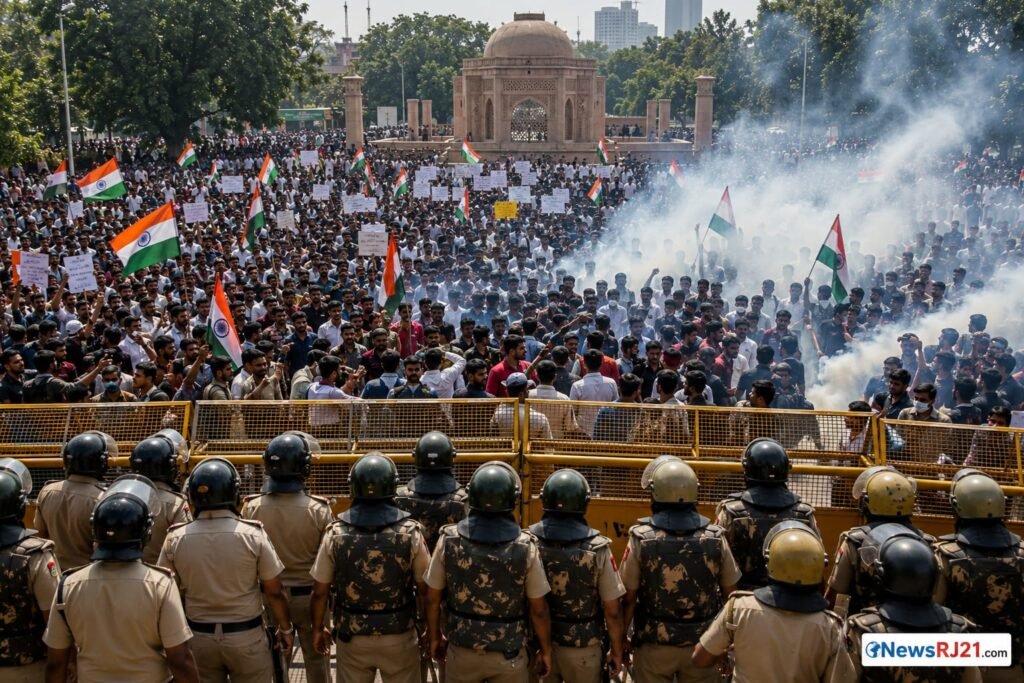
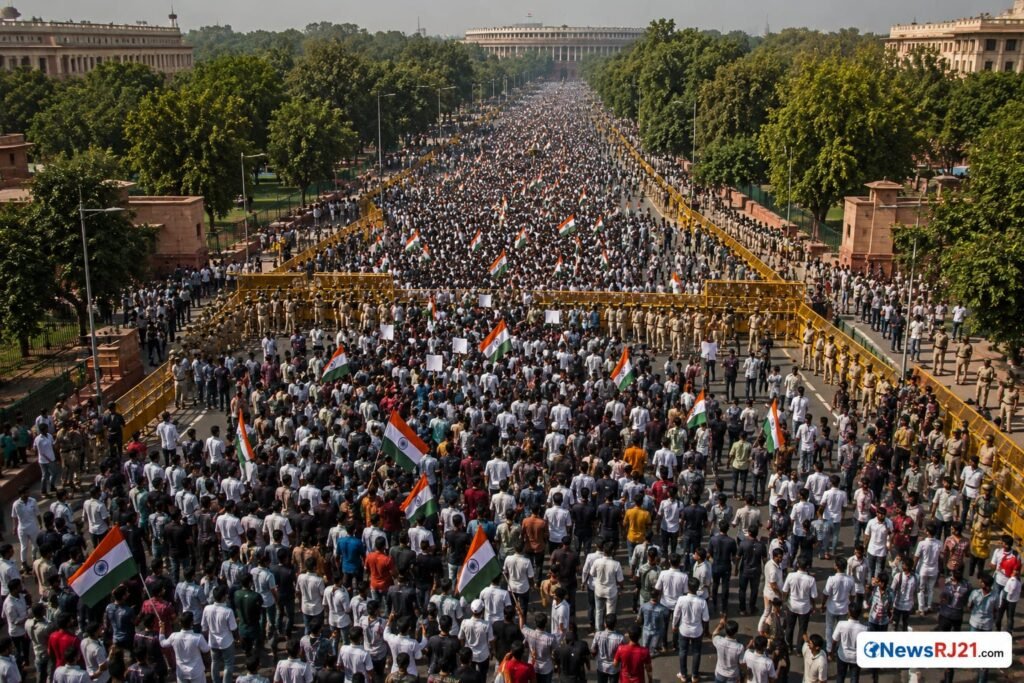
The CJP protest at Jantar Mantar has become one of India’s biggest youth-led demonstrations in recent months. Thousands of students, parents, teachers, and supporters gathered in New Delhi to demand reforms in the education system and action on issues they believe have affected millions of young people across the country. The large turnout and widespread online support quickly turned the protest into national news. CJP Protest at Jantar Mantar.
Public attention increased even further after videos showing confrontations between protesters and Delhi Police circulated widely on social media. The alleged use of tear gas, baton charges, and the detention of several protesters sparked intense debate about the right to peaceful protest and the handling of public demonstrations. These developments ensured that the CJP protest remained one of the most discussed topics across television channels, digital media platforms, and social networking sites. CJP Protest at Jantar Mantar.
Apart from the clashes, the protest also drew attention because of the participation of well-known activists and the support expressed by several opposition leaders. The combination of large crowds, political reactions, and continuous media coverage transformed the Jantar Mantar demonstration into a nationwide issue. CJP Protest at Jantar Mantar.
Who Founded the Cockroach Janta Party and What Is Its Mission?
The Cockroach Janta Party was founded by Abhijeet Dipke, a public relations graduate who launched the movement in May 2026 following public controversy over remarks directed at unemployed youth. According to the movement’s official platform, its objective is to amplify the voices of young people who believe they have been ignored by the system. CJP Protest at Jantar Mantar.
The movement says its mission is centered on improving transparency in education, ensuring accountability in public institutions, and creating opportunities for India’s youth. Through peaceful demonstrations, online campaigns, and public engagement, CJP has encouraged citizens to participate in democratic discussions and demand reforms. CJP Protest at Jantar Mantar.
As membership expanded rapidly, the movement organized large public gatherings, including the protest at Jantar Mantar, which later became the focal point of national attention after tensions escalated during the march toward Parliament. CJP Protest at Jantar Mantar.
Why Did Thousands of People Join the CJP Protest?
The Cockroach Janta Party (CJP) protest witnessed participation from thousands of students, job aspirants, teachers, parents, and young professionals from across India. Many protesters said they joined the movement because they were frustrated with repeated allegations of examination irregularities, paper leaks, delays in recruitment, and what they described as a lack of accountability in the education system. The large turnout reflected growing concerns among young people about their future and career opportunities. CJP Protest at Jantar Mantar.
Supporters reached Jantar Mantar carrying banners, placards, and the national flag while raising slogans demanding reforms. Volunteers arranged drinking water, medical assistance, and help desks for participants arriving from different states. Throughout the day, social media platforms were flooded with videos and photographs from the protest, helping the movement gain nationwide attention. CJP Protest at Jantar Mantar.
According to the organizers, the protest was intended to remain peaceful and democratic. They urged participants to maintain discipline while pressing the government to address their concerns through dialogue rather than confrontation. CJP Protest at Jantar Mantar.
What Are the Five Main Demands of the Cockroach Janta Party?
The Cockroach Janta Party presented a five-point charter of demands, describing it as a roadmap to restore confidence in India’s education and recruitment systems. The movement called for greater transparency, accountability, and stronger safeguards to protect the interests of students and job seekers. CJP Protest at Jantar Mantar.
Among the key demands was the resignation of Union Education Minister Dharmendra Pradhan over alleged failures in handling examination-related controversies. The organization also sought an independent investigation into major examination and recruitment issues, stronger action against those responsible for paper leaks, reforms to improve transparency in future examinations, and better protection of students’ rights. Protest leaders argued that these measures were necessary to rebuild public trust in the system. CJP Protest at Jantar Mantar.
The organizers maintained that their campaign was not limited to a single examination but represented broader concerns about education, employment, and opportunities for India’s youth. CJP Protest at Jantar Mantar.
Why Was Jantar Mantar Choosen for the CJP Protest?
Jantar Mantar has historically served as one of India’s most prominent venues for peaceful public demonstrations. Located in the heart of New Delhi, it has hosted protests on issues ranging from education and employment to social justice and governance. Because of its symbolic importance, the Cockroach Janta Party selected Jantar Mantar as the starting point for its nationwide campaign. CJP Protest at Jantar Mantar.
The protest site gradually became a gathering point for thousands of supporters from different states. As participation increased, Delhi Police strengthened security arrangements by deploying additional personnel, installing barricades, and regulating traffic around central Delhi. Authorities also closely monitored the situation because the organizers had announced a planned “Sansad Chalo” march toward Parliament during the Monsoon Session. CJP Protest at Jantar Mantar.
The peaceful gathering at Jantar Mantar eventually set the stage for the dramatic events that followed when protesters attempted to march toward Parliament, leading to one of the biggest confrontations between demonstrators and police in recent months. CJP Protest at Jantar Mantar.
Timeline of the CJP Protest at Jantar Mantar
The CJP protest began with supporters gathering at Jantar Mantar from the morning hours. Students, job aspirants, teachers, and youth activists from different states assembled with banners, placards, and the Indian national flag. Volunteers organized drinking water, medical support, and registration desks while protest leaders addressed the crowd and explained the objectives of the movement. CJP Protest at Jantar Mantar.
As the day progressed, the number of participants continued to grow, attracting extensive media coverage. Television channels, digital news platforms, and social media users shared live updates, making the protest one of the country’s top trending topics. Organizers repeatedly appealed to participants to maintain peace and discipline throughout the demonstration. CJP Protest at Jantar Mantar.
The gathering remained largely peaceful during the initial hours, with speeches, slogan chanting, and discussions focusing on education reforms, examination transparency, and accountability. However, the atmosphere changed after the organizers announced their plan to begin the “Sansad Chalo” march toward Parliament. CJP Protest at Jantar Mantar.
How Did the CJP Protest Turn Into a Parliament March?
After addressing supporters at Jantar Mantar, CJP leaders called for a peaceful march toward Parliament to submit their demands directly to the government. Protesters said the march was intended to highlight the concerns of students and unemployed youth during the ongoing Parliament session. CJP Protest at Jantar Mantar.
Since Parliament and the surrounding roads are among the most heavily secured areas in New Delhi, Delhi Police had already deployed a large number of personnel and installed multiple barricades along the proposed route. Authorities informed protesters that they could not proceed beyond the designated protest area because of security restrictions. CJP Protest at Jantar Mantar.
Despite repeated announcements by police, many protesters continued moving toward the barricades. As the crowd swelled and pressure increased near the restricted zone, the situation became increasingly tense. Videos from the scene showed protesters raising slogans while police attempted to stop them from advancing. CJP Protest at Jantar Mantar.
What Happened Before the Delhi Police Lathicharge?
Before any force was used, Delhi Police made repeated public announcements requesting protesters to return to the permitted protest area and avoid entering high-security zones around Parliament. Senior officers were seen speaking with protest leaders in an effort to prevent the situation from escalating. CJP Protest at Jantar Mantar.
According to police, additional barricades were placed and security personnel formed human chains to stop the crowd from moving forward. Protest organizers, however, maintained that they intended to continue a peaceful march and urged authorities to allow them to submit their memorandum. CJP Protest at Jantar Mantar.
As more protesters gathered near the barricades, pushing and heated arguments were reported between sections of the crowd and security personnel. The tension continued to rise over the next few minutes, eventually leading to direct confrontation and the police action that dominated national headlines. CJP Protest at Jantar Mantar.
Why Did Delhi Police Lathicharge CJP Protesters?
The confrontation began when groups of CJP protesters attempted to move beyond the designated protest area during the planned “Sansad Chalo” march. Delhi Police had already declared the route toward Parliament a high-security zone and installed multiple barricades to prevent unauthorized entry. According to police officials, repeated announcements were made requesting protesters to remain within the permitted area and follow the agreed conditions of the demonstration. CJP Protest at Jantar Mantar.
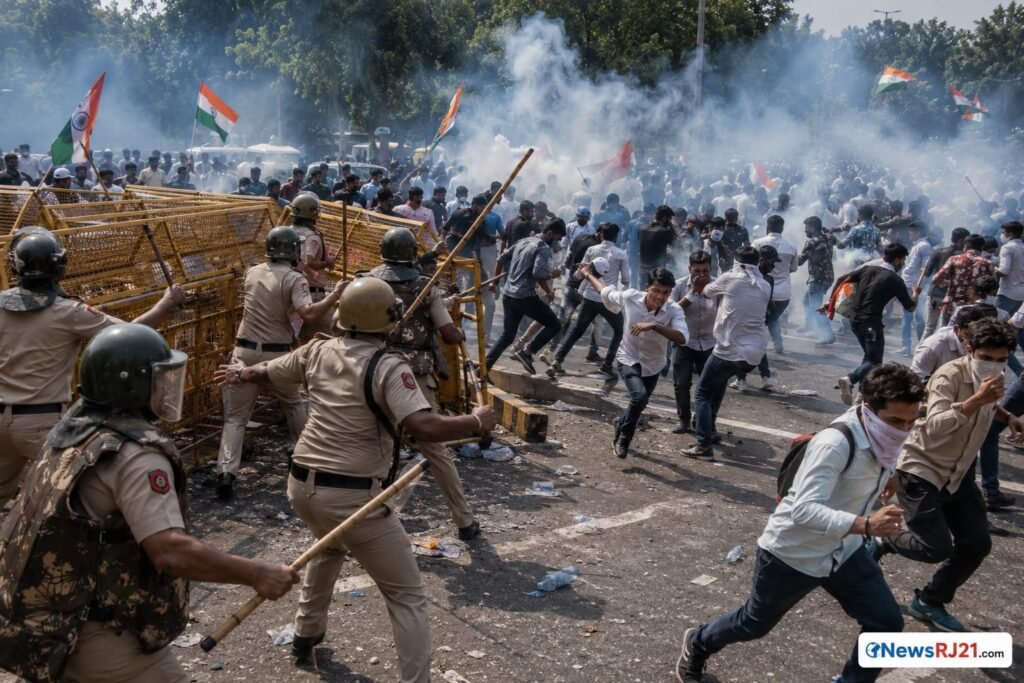
As sections of the crowd continued moving toward the barricades, tensions escalated rapidly. Videos circulating on social media showed protesters raising slogans while police personnel tried to push the crowd back. Within minutes, the confrontation intensified, leading to allegations that Delhi Police used batons (lathis) and tear gas to disperse the gathering. CJP Protest at Jantar Mantar.
Police maintained that the action was taken only after protesters allegedly attempted to breach security arrangements and ignore repeated warnings. Protest organizers, however, rejected this version and claimed that the march was peaceful and that unnecessary force was used against demonstrators. CJP Protest at Jantar Mantar.
What Happened During the Clash Between CJP Protesters and Delhi Police?
The clash quickly turned into one of the most widely discussed moments of the protest. Eyewitness videos showed protesters running in different directions as police advanced to disperse the crowd. Several demonstrators alleged that they were struck with batons, while others claimed that tear gas shells were fired to break up the gathering.
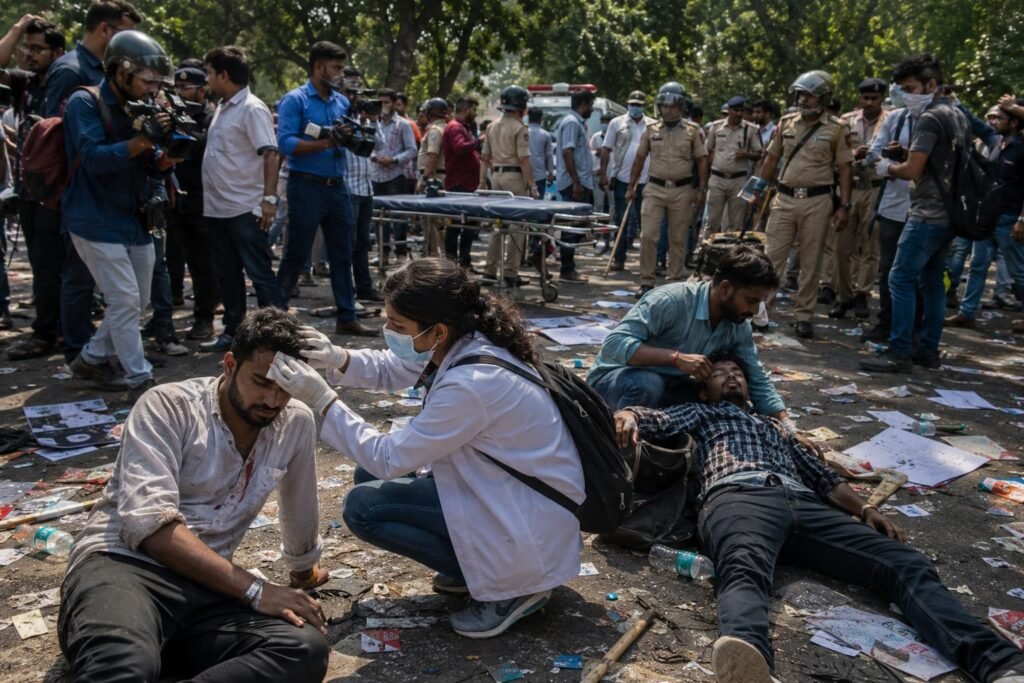
Many participants reported minor injuries during the confrontation, and volunteer teams at the protest site immediately began assisting those who required first aid. Some protesters were seen helping injured participants move to safer locations while others continued raising slogans against the police action.
The incident was captured from multiple angles by journalists, independent creators, and members of the public. Within hours, videos and photographs from the scene spread across social media platforms, triggering nationwide debate over the handling of the protest.
Arrests, Injuries, and Official Statements
Following the clash, Delhi Police detained several protesters and shifted them to nearby police stations as part of efforts to restore normalcy. Authorities stated that the detentions were carried out to prevent further escalation and maintain law and order in the highly sensitive area surrounding Parliament.
Protest leaders demanded the immediate release of those detained and alleged that peaceful demonstrators had been treated unfairly. They also called for an independent inquiry into the police action, claiming that excessive force had been used during the operation.
In its official response, Delhi Police reiterated that officers had acted according to established security protocols after repeated warnings failed to stop protesters from advancing toward restricted areas. The differing accounts presented by police and protest organizers became a major subject of public discussion, with many legal experts and civil society groups calling for a transparent review of the incident.
Government Response to the CJP Protest
The developments at Jantar Mantar and the subsequent police action prompted responses from government representatives, who emphasized that every citizen has the right to peaceful protest but that demonstrations must comply with security regulations. Officials stated that the area surrounding Parliament is designated as a high-security zone and that law enforcement agencies are responsible for ensuring public safety and preventing unauthorized access.
Government representatives also maintained that Delhi Police acted in accordance with established procedures after protesters allegedly attempted to move beyond the permitted protest area. According to official statements, security measures were taken to prevent the situation from escalating and to maintain order during the ongoing Parliament session.
At the same time, officials urged protesters to express their concerns through lawful and peaceful means. They reiterated that dialogue remains the most effective way to address public grievances and encouraged all parties to avoid further confrontation.
Political Reactions to the CJP Protest
The CJP protest triggered strong political reactions across the country. Several opposition leaders criticized the police action, alleging that the use of force against protesters was unnecessary and calling for an independent inquiry into the incident. They argued that students and young people should be allowed to raise their concerns peacefully without fear of violence or intimidation.
Leaders from the ruling side defended the security arrangements, stating that protecting Parliament and other sensitive government locations is a top priority. They argued that law enforcement agencies must act whenever security protocols are violated, especially during large public gatherings.
The differing political responses further intensified the national debate. While some viewed the protest as an important democratic movement highlighting youth concerns, others emphasized the need to balance the right to protest with the responsibility to maintain law and order.
Public Reaction and Social Media Buzz
The CJP protest quickly became one of the most talked-about topics on social media. Videos showing the massive gathering at Jantar Mantar, the “Sansad Chalo” march, and the confrontation with Delhi Police were widely shared across platforms such as X, Instagram, Facebook, and YouTube. Several hashtags related to the protest trended for hours, attracting millions of views and comments.
Public opinion remained sharply divided. Many users expressed support for the protesters, saying the movement reflected the frustrations of students and job seekers across the country. Others believed that while peaceful protest is a democratic right, attempts to enter restricted areas near Parliament could create security concerns.
Legal experts, education activists, journalists, and civil society organizations also joined the discussion, calling for transparency from both the organizers and the authorities. As the debate continued online and offline, the CJP protest evolved from a demonstration at Jantar Mantar into a nationwide conversation about youth issues, democratic rights, public accountability, and the role of law enforcement during large-scale protests.
What Could Happen Next After the CJP Protest?
The CJP protest has brought national attention to issues concerning students, competitive examinations, and youth employment. While the demonstration at Jantar Mantar has concluded, the movement is expected to continue through public campaigns, social media outreach, and future protests if the organizers believe their demands remain unaddressed.
The organizers have indicated that they will continue engaging with students and supporters across the country and may announce additional programs in the coming weeks. At the same time, the authorities are expected to review the events surrounding the protest, including the security arrangements and the confrontation near Parliament.
Political developments, official statements, and any future discussions between the government and protest representatives could determine the next phase of the movement. As more information becomes available, the situation may continue to evolve.
Key Takeaways From the CJP Protest
The Cockroach Janta Party (CJP) protest at Jantar Mantar became one of the most significant youth-led demonstrations in India in recent months. What began as a peaceful gathering demanding education reforms and greater accountability later escalated into a confrontation with Delhi Police during the planned “Sansad Chalo” march.
The incident sparked nationwide discussions about students’ rights, examination reforms, democratic protests, police action, and security around Parliament. It also highlighted the growing influence of youth-led movements and the role of social media in mobilizing public opinion.
As investigations, political reactions, and official responses continue, the CJP protest is likely to remain an important topic in India’s political and social landscape. Future developments will determine whether the movement’s demands lead to policy discussions or administrative action.
Frequently Asked Questions (FAQs)
What is the Cockroach Janta Party (CJP)?
The Cockroach Janta Party (CJP) is a youth-led public movement founded in 2026. It focuses on issues such as education reforms, examination transparency, youth employment, and public accountability.
Why did the CJP organize the Jantar Mantar protest?
According to the organizers, the protest was held to demand reforms in the education system, greater transparency in examinations, accountability for alleged irregularities, and action on issues affecting students and job seekers.
Why did Delhi Police lathicharge the protesters?
Delhi Police stated that force was used after protesters allegedly attempted to move beyond the designated protest area toward the high-security Parliament zone despite repeated warnings. Protest organizers disputed this account and alleged that excessive force was used.
Were protesters arrested during the demonstration?
Yes. Several protesters were detained after the confrontation near the barricades. Police said the detentions were carried out to restore law and order, while protest leaders demanded the immediate release of those taken into custody.
Is the CJP protest over?
The main demonstration at Jantar Mantar has concluded, but the organizers have indicated that the movement may continue through future campaigns, public meetings, and peaceful protests depending on the government’s response.
Explore More
- Strait of Hormuz:12 Shocking Facts You Need to Know
- FIFA World Cup 2026 Final: Spain vs Argentina
- Iran Threatens New Trade Route Blockade as US Expands Military Operations
- 7 Critical Updates: Trump Ramps Up Pressure on Iran
- Trump Drops 20% Hormuz Fee: 5 Major Updates
Sources:
Conclusion
The CJP protest at Jantar Mantar has become a defining moment in India’s recent youth movements, drawing attention to concerns over education, examinations, and employment. While opinions remain divided over both the protesters’ demands and the police response, the events have reignited an important national conversation about democratic rights, public accountability, and the future of India’s education system.
As the situation continues to develop, readers should rely on verified official statements and credible news sources for the latest updates. Whether the movement leads to meaningful reforms or further demonstrations, the CJP protest has already left a significant mark on the country’s public discourse.