
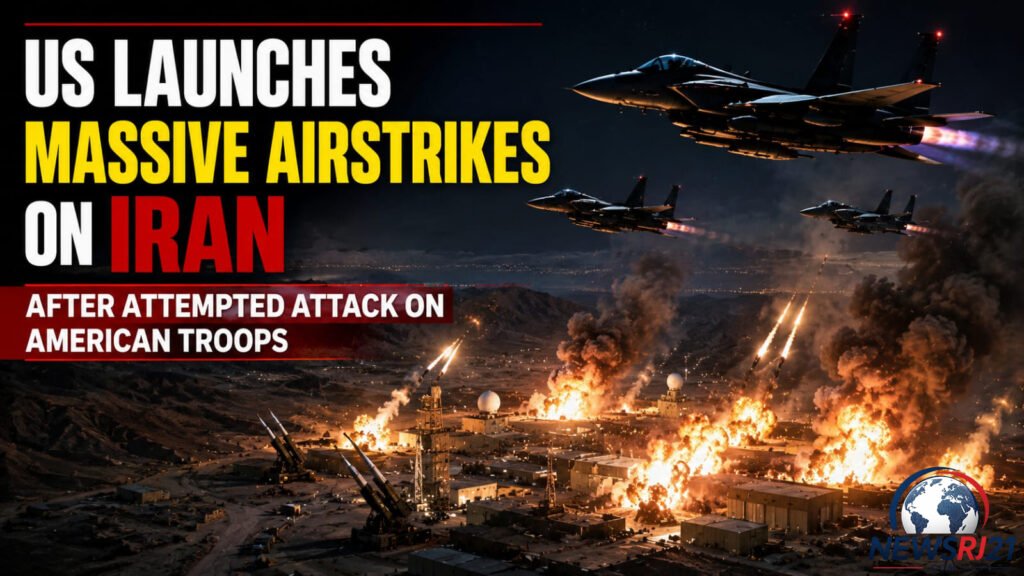
The United States launched massive airstrikes across Iran late Wednesday after Tehran allegedly attempted to target American troops stationed in Jordan with ballistic missiles. The operation, described by the US military as a “heavy wave” of strikes, targeted dozens of Islamic Revolutionary Guard Corps (IRGC) facilities, including missile sites, drone infrastructure, military command centers, and coastal defense positions.
The latest military action marks one of the most significant escalations in the US-Iran conflict in recent months. While Washington says the strikes were a direct response to attacks on its forces, Iranian state media has reported civilian casualties in some of the affected areas. With regional tensions rising and concerns growing over the security of the Middle East and global oil supplies, the conflict appears to be entering another dangerous phase. US Launches Massive Airstrikes.
Why Did the US Launch Airstrikes on Iran?
The latest US military operation came after Iran allegedly attempted to target American troops stationed in Jordan with ballistic missiles. US Launches Massive Airstrikes. According to US Central Command (CENTCOM), all incoming missiles were intercepted, but Washington described the attack as a serious escalation that required an immediate military response.
US officials said the strikes were intended to weaken Iran’s military capabilities rather than target civilian infrastructure. President Donald Trump had earlier warned that any attack on American personnel in the Middle East would trigger a strong response, a warning that was followed by Wednesday’s large-scale operation against multiple Iranian military sites.
What Military Targets Did the US Strike?
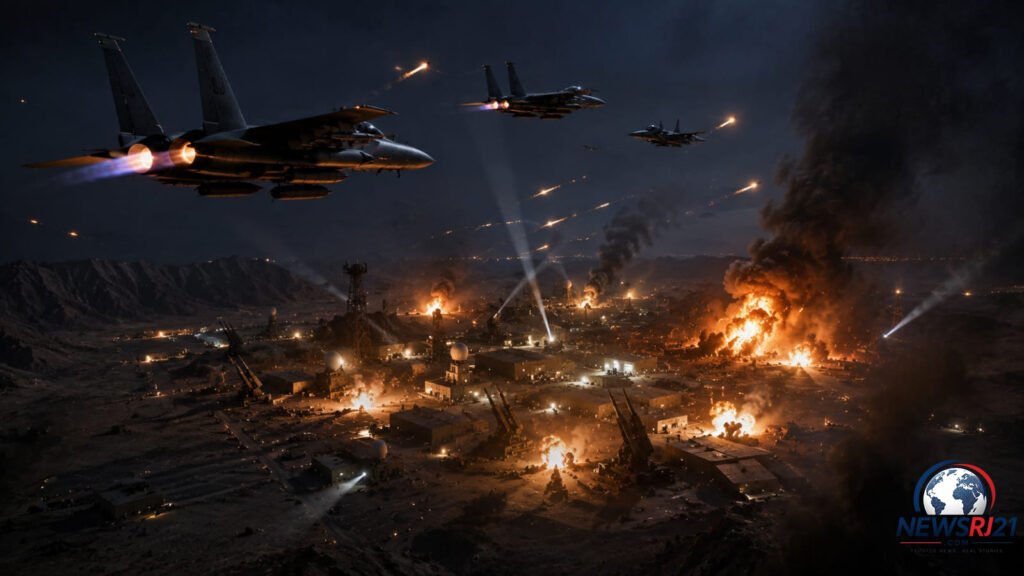
According to US Central Command (CENTCOM), the operation focused on dozens of military locations linked to Iran’s Islamic Revolutionary Guard Corps (IRGC). Officials said the strikes targeted missile launch sites, drone facilities, military command centers, coastal surveillance systems, and maritime defense infrastructure.
The US military described the operation as a carefully planned response aimed at reducing Iran’s ability to carry out future attacks against American forces and regional allies. Washington maintained that the strikes were directed at military assets and strategic infrastructure rather than civilian locations.
Iranian state media confirmed that multiple areas, including Qeshm Island and Abadan, were hit during the operation. US Launches Massive Airstrikes Both locations are strategically important because of their proximity to key energy facilities and shipping routes in the Persian Gulf. US Launches Massive Airstrikes.
The latest strikes represent one of the largest US military operations against Iranian targets in recent months, highlighting how rapidly tensions between the two countries have escalated despite earlier hopes for diplomatic talks.
Iran Reports Civilian Casualties After the Strikes
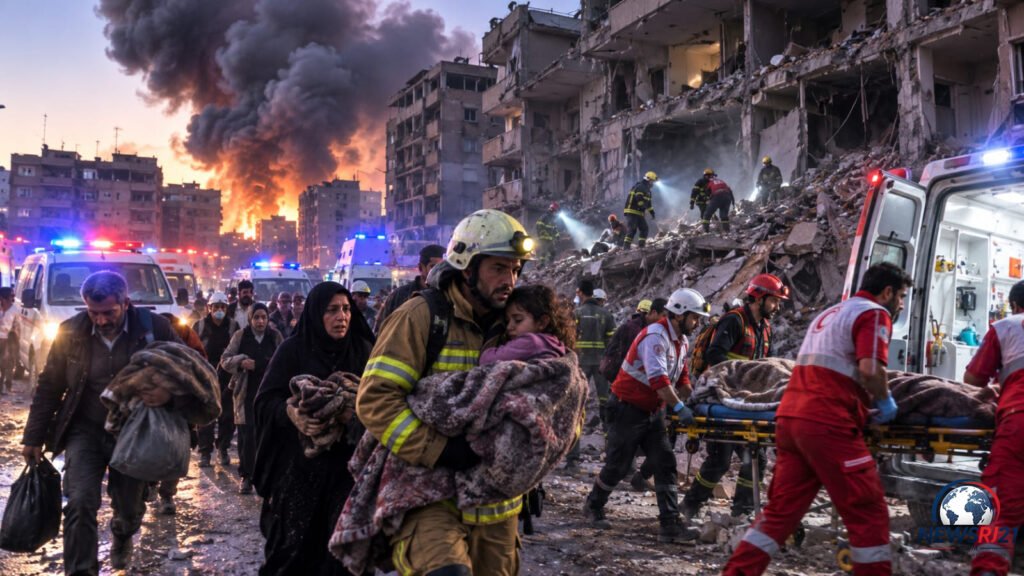
Iranian state media reported that the latest US airstrikes caused civilian casualties in several affected areas, including Qeshm Island. According to local authorities cited by state-run outlets, three members of the same family—including a two-year-old child—were killed after a residential building was reportedly struck.
Officials in Tehran also said other locations in southern and western Iran sustained damage during the operation. However, independent verification of the reported casualties has not yet been possible, and US authorities have not publicly commented on the specific claims. US Launches Massive Airstrikes.
The contrasting narratives from Washington and Tehran highlight the information battle that often accompanies military conflicts. While the US says the operation targeted military infrastructure linked to the IRGC, Iran has emphasized the reported civilian impact, drawing renewed international attention to the humanitarian consequences of the escalating conflict. US Launches Massive Airstrikes.
As both sides continue to present competing accounts, concerns are growing that further retaliation could increase civilian risks and make diplomatic efforts even more difficult.
Iran’s Earlier Attack on US Forces and Ships
The latest US operation followed a series of attacks that Washington says significantly raised tensions across the Middle East. On Tuesday, Iran’s Islamic Revolutionary Guard Corps (IRGC) claimed responsibility for launching ballistic missiles toward a US military base and command center in Jordan, describing the move as retaliation for previous American military actions. US Launches Massive Airstrikes.
At the same time, the IRGC said its naval forces targeted three oil tankers transiting the Strait of Hormuz after accusing them of ignoring security warnings. The vital waterway handles a significant share of the world’s oil shipments, making any disruption a major concern for global energy markets and international shipping.
US officials said the attempted attacks reinforced their assessment that Iran continued to pose a direct threat to American personnel and regional stability. Washington argued that the latest airstrikes were intended to deter further attacks and reduce Iran’s military capabilities.
The exchange of military action has sharply increased fears that the conflict could spread beyond Iran and involve more countries across the region, further complicating efforts to restore stability through diplomacy. US Launches Massive Airstrikes.
Saudi Arabia Pushes for De-escalation
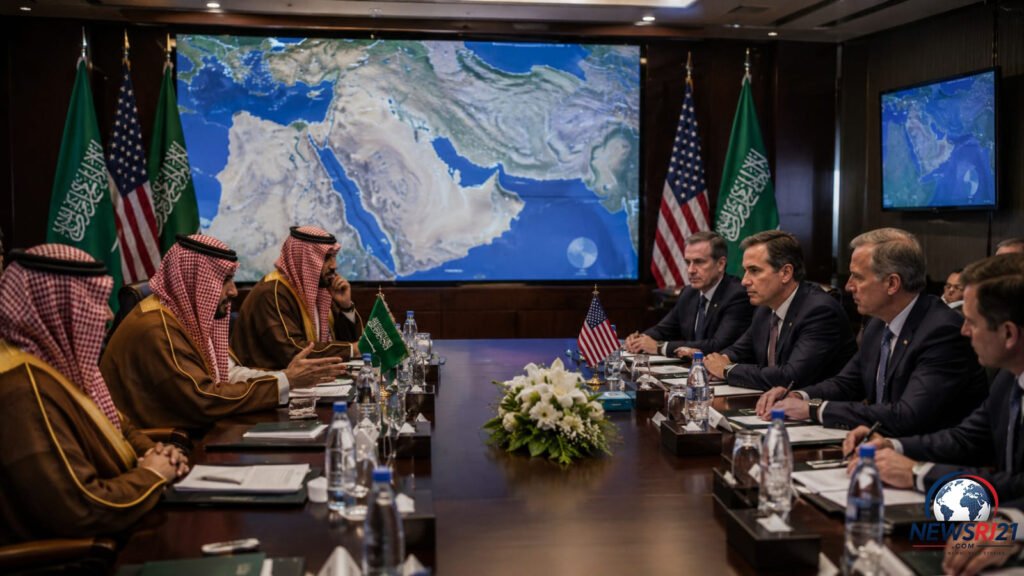
As military operations intensified, diplomatic efforts continued behind the scenes to prevent the conflict from expanding further. Reports indicated that Saudi Arabia urged both sides to exercise restraint, reflecting growing concern that a prolonged confrontation could destabilize the wider Middle East.
According to reports, Saudi Defence Minister Prince Khalid bin Salman conveyed Riyadh’s preference for de-escalation during discussions with US officials. US Launches Massive Airstrikes. While neither Washington nor Tehran has announced any breakthrough, the outreach underscores Saudi Arabia’s interest in avoiding a broader regional war that could threaten security and economic stability. US Launches Massive Airstrikes.
The renewed diplomatic push comes despite several months of escalating military exchanges between the United States and Iran. Regional governments remain concerned that continued retaliation could increase the risk of attacks on critical infrastructure, commercial shipping routes, and neighboring countries.
With tensions still running high, analysts believe diplomatic channels remain essential to preventing further escalation, even as both sides continue to signal their willingness to respond forcefully to future attacks.
How the US-Iran War Reached This Point
The latest exchange of strikes is the result of months of rising tensions between Washington and Tehran. Earlier this year, the United States and Israel carried out military operations against Iranian targets, prompting a series of retaliatory actions by Iran and its allied groups across the Middle East.
Although there were brief signs of diplomacy in recent days, hopes for a breakthrough quickly faded after the reported missile attack on American forces in Jordan. US Launches Massive Airstrikes. The renewed violence has effectively ended the period of relative calm, pushing both sides back toward direct military confrontation.
The conflict has also expanded beyond Iran’s borders. Iraq, Jordan, the Strait of Hormuz, and other strategically important locations have increasingly become part of the crisis, raising fears that the fighting could draw more countries into the confrontation. US Launches Massive Airstrikes.
With each new strike followed by another round of retaliation, analysts warn that the risk of a wider regional conflict is growing. Unless meaningful diplomatic progress is made, the cycle of military action could continue in the weeks ahead.
Impact on the Middle East and Global Oil Supply
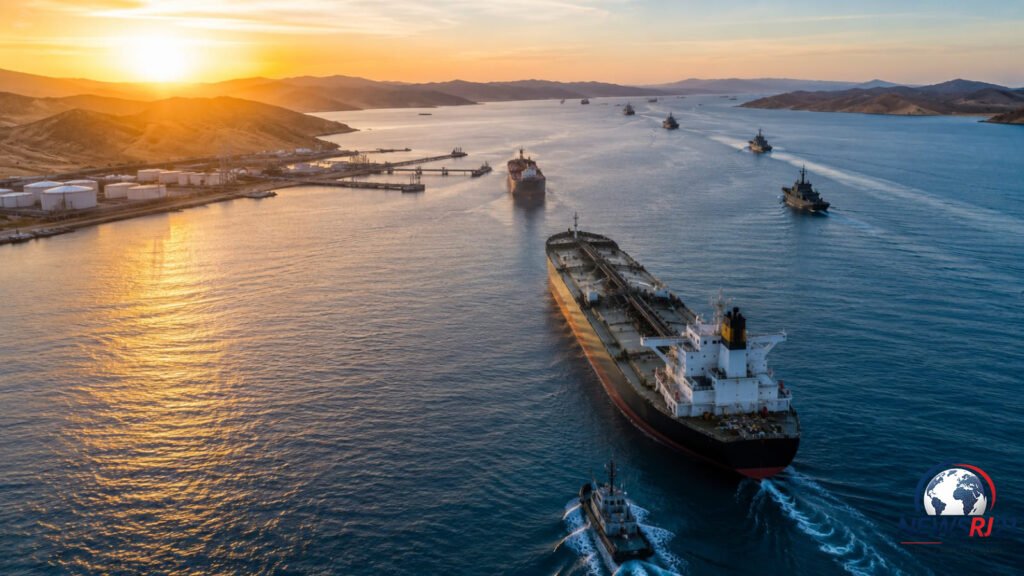
The latest escalation has renewed concerns about stability across the Middle East, with security analysts warning that further military action could have consequences far beyond the immediate conflict. Countries across the region are closely monitoring developments as the risk of additional attacks remains high.
Particular attention is focused on the Strait of Hormuz, one of the world’s most important maritime trade routes. US Launches Massive Airstrikes. A significant share of global crude oil and liquefied natural gas passes through the narrow waterway, meaning any disruption could affect international energy markets and global shipping.
Beyond energy supplies, regional governments are also worried about the potential impact on trade, investment, and civilian security. Airlines, shipping companies, and multinational businesses may be forced to reassess operations if the security situation continues to deteriorate. US Launches Massive Airstrikes.
While global markets have remained watchful, much will depend on whether the United States and Iran choose further military retaliation or return to diplomatic engagement. The coming days are expected to be critical in determining whether the crisis stabilizes or expands into a broader regional conflict.
What’s Next in the US-Iran Conflict?
The immediate focus is on whether either side chooses to escalate further or opens the door to renewed diplomacy. While the United States has described its latest operation as a response to attacks on its forces, Iran has warned that it reserves the right to retaliate, keeping the region on high alert.
Military analysts believe the coming days will be crucial. Any fresh missile launches, attacks on US bases, or disruptions in key shipping lanes could trigger another round of military action, increasing the risk of a wider regional conflict. US Launches Massive Airstrikes.
At the same time, diplomatic efforts have not completely disappeared. Several regional governments continue to encourage dialogue, hoping to prevent further violence that could threaten regional security, global trade, and energy markets. US Launches Massive Airstrikes.
For now, the situation remains highly fluid. Governments, financial markets, and international observers are closely monitoring developments, as the next move by either Washington or Tehran could shape the future of the conflict and its wider impact on the Middle East. US Launches Massive Airstrikes.
Frequently Asked Questions (FAQs)
Why did the US launch airstrikes on Iran?
The United States said the operation was carried out in response to an attempted ballistic missile attack on American troops stationed in Jordan. US officials described the strikes as a defensive measure aimed at reducing Iran’s military capabilities and deterring future attacks.
Which Iranian locations were targeted?
According to US Central Command (CENTCOM), the strikes focused on military facilities linked to the Islamic Revolutionary Guard Corps (IRGC), including missile sites, drone infrastructure, command centers, coastal defense positions, and maritime capabilities. Iranian media also reported strikes in areas such as Qeshm Island and Abadan. US Launches Massive Airstrikes.
Did the US strikes cause civilian casualties?
Iranian state media reported that several civilians were killed, including members of a family on Qeshm Island. However, the reported casualties have not been independently verified, and US officials have not publicly confirmed those claims.
Could the conflict affect global oil prices?
Yes. Rising tensions have increased concerns over the security of the Strait of Hormuz, a critical route for global oil exports. Any prolonged disruption to shipping in the region could influence international energy markets and contribute to higher oil prices.
Is there still a chance for diplomacy?
Despite the latest military escalation, regional countries continue to encourage dialogue to prevent a wider conflict. Whether diplomacy can succeed will largely depend on the actions taken by both Washington and Tehran in the coming days. US Launches Massive Airstrikes.
Conclusion
The latest US military operation marks another major turning point in the escalating conflict between Washington and Tehran. While the United States says the strikes were aimed at preventing future attacks on its forces, Iran has accused Washington of intensifying the crisis and reported civilian casualties. With diplomatic efforts continuing alongside growing military tensions, the coming days will be critical in determining whether the conflict moves toward further escalation or a renewed push for negotiations. US Launches Massive Airstrikes.
References
Explore More
- Commonwealth Games 2026: Latest Results, Medal Table, Top Performers & Today’s Highlights
- Breaking: Zinedine Zidane Officially Confirmed as France Head Coach – 10 Major Takeaways
- CJP Protests: Dharmendra Pradhan Resigns, Students Call It a Major Victory
- CJP Protest at Jantar Mantar: 11 Shocking Updates on the Lathicharge, Arrests & Student Demands
- Strait of Hormuz:12 Shocking Facts You Need to Know